
What’s the Difference Between a Dome and a Zome? (And Other Geodesic Structure Types)
Truncated domes, classic domes, zomes, and hybrids all build differently and shine at different things. Here’s how to tell them apart and pick the one that fits your project and your skill level.
When it comes to geodesic structures, not all designs are created equal. Whether you’re dreaming of a greenhouse, a cabin, or a creative workspace, choosing the right structure is the best place to start, because that one decision shapes everything downstream: how hard the build is, what it costs, how it handles weather, and how it looks when you’re done.
So let’s break down the main types we make DIY plans for — truncated domes, classic domes, zomes, and our hybrid Horizon Dome — so you can figure out what’s right for you.

Truncated Domes (the Beginner Bucky Ball)
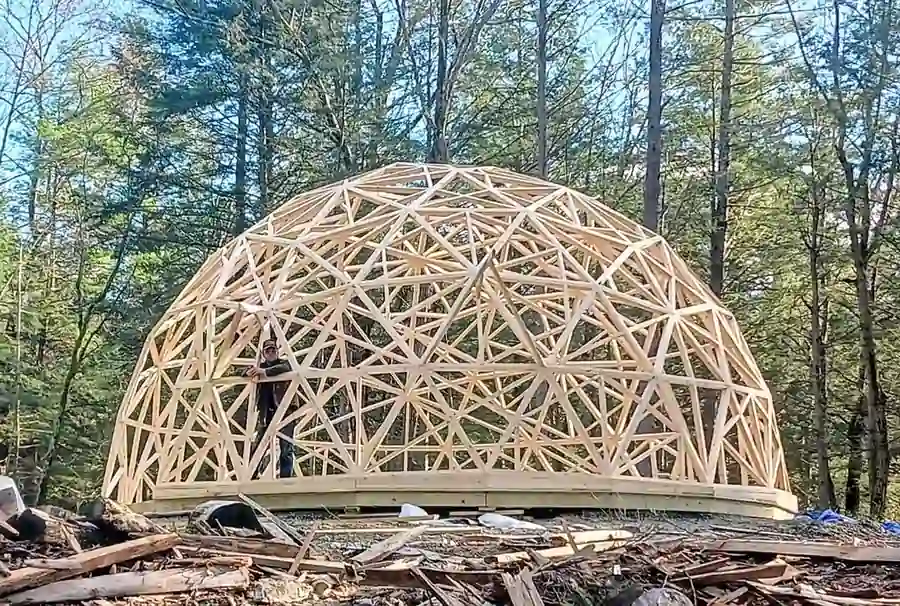
A truncated dome is really just a simplified version of the classic geodesic dome, and it’s where I’d point most first-timers who want a dome shape rather than a zome.
The big advantage is simplicity. Like a zome, it works off a single overall panel length, and the whole thing comes down to just two unique struts. That makes it way less intimidating to fabricate. The overall frame isn’t as strong as a classic dome, but for most builds you can make it plenty strong without much trouble.
This is a great starting point for folks building their first geodesic structure. We put together a set of plans for exactly this purpose, called the Beginner Bucky Ball plans.

Pros:
- Beveled method and deep frame method
- Single bevel angle and overall panel length, few unique panels
- Only two unique struts
Cons:
- Panels lack a fixed up/down orientation, making sealing and roofing more nuanced
- Not as inherently strong as a classic dome

Want a hand picking the right structure for your specific project? Grab our free Dome & Zome Builders Quick Start Guide below — drop your email and we’ll send it your way.
Classic Geodesic Domes
Popularized by Buckminster Fuller, classic domes are timeless and incredibly stable. Their geometry lets you build large structures with very few unique faces, so you get a lot of repeatable parts, and the consistent angles between faces make beveled frame builds more straightforward.
Because domes are built from hexagons and pentagons, the panels arrange concentrically in a way that’s efficient both structurally and visually. You get that cohesive, spherical look that’s honestly hard to beat. And the aerodynamic shape naturally resists strong winds and sheds snow, which makes domes a great call in areas that get heavy weather.
The geometry does come with a couple of challenges. Panels don’t have a fixed up or down orientation, so sealing and roofing takes careful planning, especially around waterproofing and flashing. And because domes are usually built with beveled frames, you’re dealing with compound cuts and jigs during fabrication. That adds some complexity, but the payoff is a structure that’s both stunning and seriously strong. Our geodesic dome plans walk through the least expensive way to build the strongest, most beautiful dome frame possible.

Pros:
- Highly stable and proven design
- Fewer unique parts make assembly faster
- Ideal for fully beveled frame builds
- Aerodynamic shape resists weather and sheds snow naturally
Cons:
- Panels lack a fixed up/down orientation, making sealing and roofing more nuanced
- Requires more complicated cuts and jigs compared to non-beveled structures

Zomes
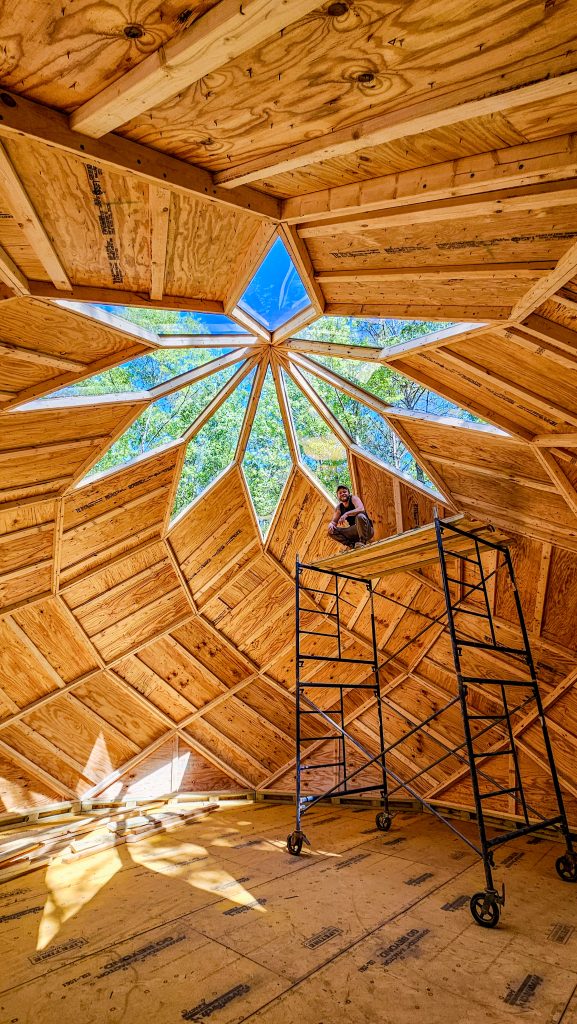
Zomes are a modern twist on the geodesic dome, and they hit a sweet spot of simplicity and versatility. They’re built from rhombi (a type of uniform parallelogram) and really shine with the non-beveled method — no compound cuts, no complicated jigs, just straightforward construction. Because every panel keeps a consistent orientation, roofing and flashing are far simpler than on a dome.
That’s what makes zomes especially great for DIY. The components are repeatable, the process is approachable, and the steeper rooflines both look elegant and shed snow and rain efficiently. That fixed panel orientation is the quiet hero here: it makes installing roofing and waterproofing dramatically easier, which is why zomes are such a good fit for greenhouses, studios, and any space where you want assembly to stay simple.
The flip side is the beveled frame zome. Go that route and you’re looking at many unique panel types and inconsistent taper angles across the structure, which demands high precision and leaves little room for error. It’s doable, but I’ll be straight with you: I think the non-beveled method is the better path in almost every way. Our DIY zome plans let you take either route, using the techniques we’ve dialed in after building dozens of these.
Pros:
- Easiest geodesic structure to build (with the non-beveled method)
- Prefabrication is simpler, saving time and effort
- Tapered rooflines naturally shed snow
- Panels have fixed orientation, simplifying roofing and flashing
Cons:
- Beveled frame zomes are complex, requiring many unique struts and tight tolerances
Pro Tip: Skip the beveled frame zome unless you’re ready for a challenge—it’s possible, but not the easiest path. I believe the non beveled method is superior in many ways.


Horizon Dome
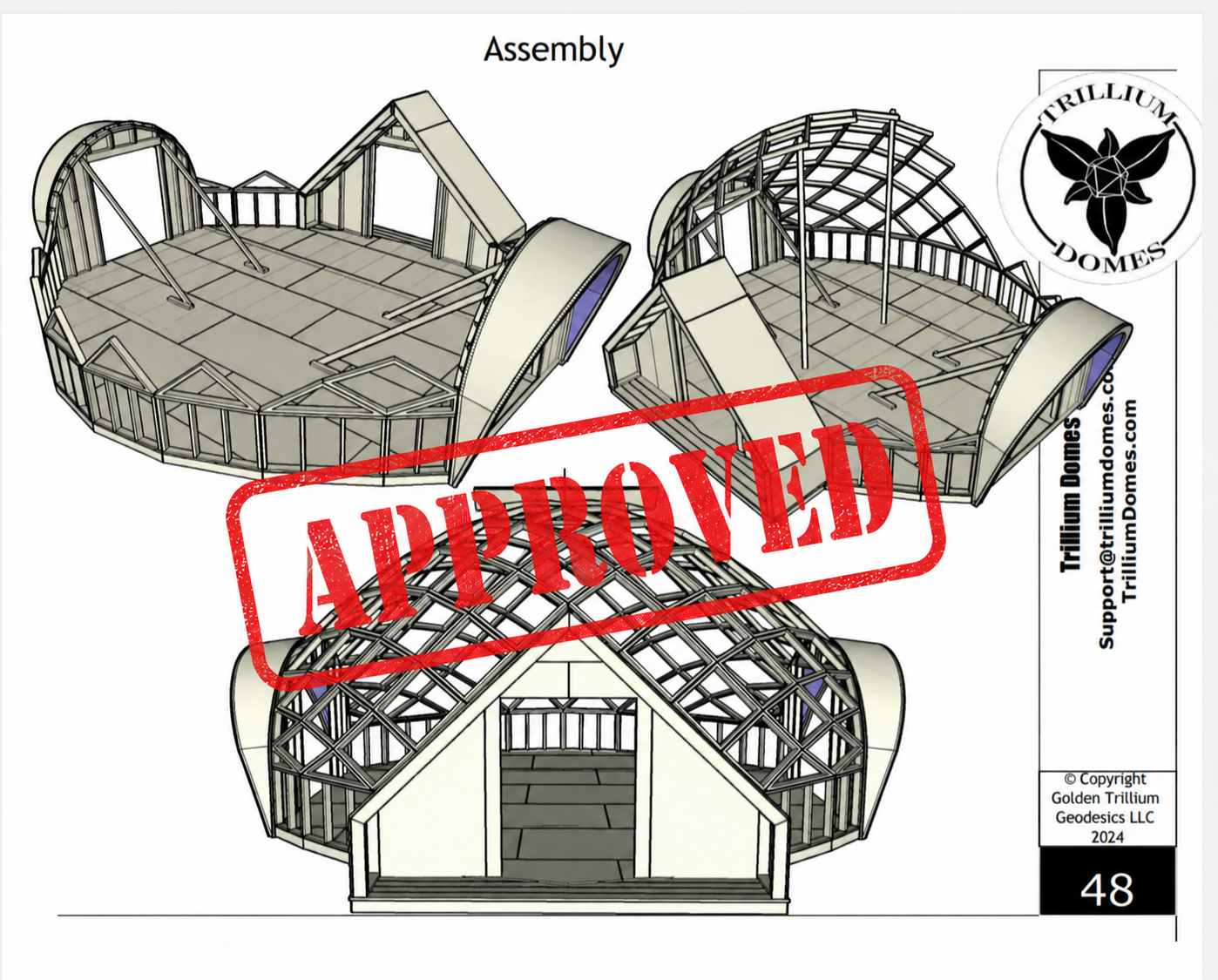
Our Horizon Domes combine the aesthetics of domes and zomes, blending the best features of both. These hybrids feature a non-beveled method for easy assembly and introduce flexible design options like awnings, custom openings, and elliptical footprints. That last one being virtually unknown in the dome world.
Horizon Domes are designed to be highly customizable, making them perfect for unique projects that require creative layouts. The ability to integrate doors, windows, and awnings into the design means you can tailor them to suit specific needs—whether it’s a greenhouse with maximum light exposure or a cozy retreat with extra ventilation.
Horizon Domes offer the ability to step outside the fully repeatable geometry of domes and zomes. This can add a bit of complexity to the build process depending on which configuration you choose. However, our hybrid horizon dome build plans walk you through every step in detail, and you can always reach out if you run into any issues!

Pros:
- Highly customizable and visually striking
- Simplified non-beveled construction
- More flexibility for doors, windows, and awnings
- Ideal for unique layouts and creative designs
- Non-radially symmetrical dome
Cons:
- Custom elements can add complexity compared to repeatable shapes found in domes and zomes


So Which One Should You Build?
If you want the easiest path, start with a non-beveled zome. It’s simple, efficient, and stunning. If you’re after a more traditional look, a beveled frame dome is a tried-and-true choice. And if you want maximum flexibility and customization, the Horizon Dome is where to look. Still want a dome shape but it’s your first build? The truncated Beginner Bucky Ball splits the difference.
No matter which one calls to you, we’ve got the plans and the resources to make the build as smooth as possible. Each set walks you through the full process step by step, with the cut lists, angles, and techniques already worked out so you’re not guessing. Browse all the plans here and find the one that fits your dream space.
Let’s make it happen.
~ Johnny Bayles
Want a hand picking the right structure for your specific project? Grab our free Dome & Zome Builders Quick Start Guide below — drop your email and we’ll send it your way.